Custom Call-Center Agent Platform
Enterprise UX · Interaction Design · Design Systems
UX Designer (sole IC, working under a design lead)
Tools: Figma
Goal
Design a unified, internal platform that consolidates a fragmented landscape of agent tools into a single, cohesive experience.
The Problem
Call-center agents working for this client were using multiple disconnected tools to handle a single customer interaction. Their success was dependent on their ability to context-switch and piece together a complete picture of the customer's profile on the fly.
The lack of a shared system also meant no consistent interaction patterns, no shared design language, and no scalable foundation to build on.
The Challenge
The scope included multiple lines of business, distinct agent roles with different mental models, and the platform needed to support real-time customer support as well as back-office case management, accounting for both customer-facing agents who need rapid, at-a-glance access to account information, and back-office agents who are task-driven and need a clear, linear path to resolution.
Approach
Working closely with a design lead, I owned the end-to-end wireframing and interaction design across the platform. The process was cross-functional and agile. I collaborated with product and engineering stakeholders on an ongoing basis, iterating quickly as requirements evolved.
In parallel, I helped evolve a scrappy, ad-hoc design library into a structured, documented design system that could scale with the team.
Design Decisions
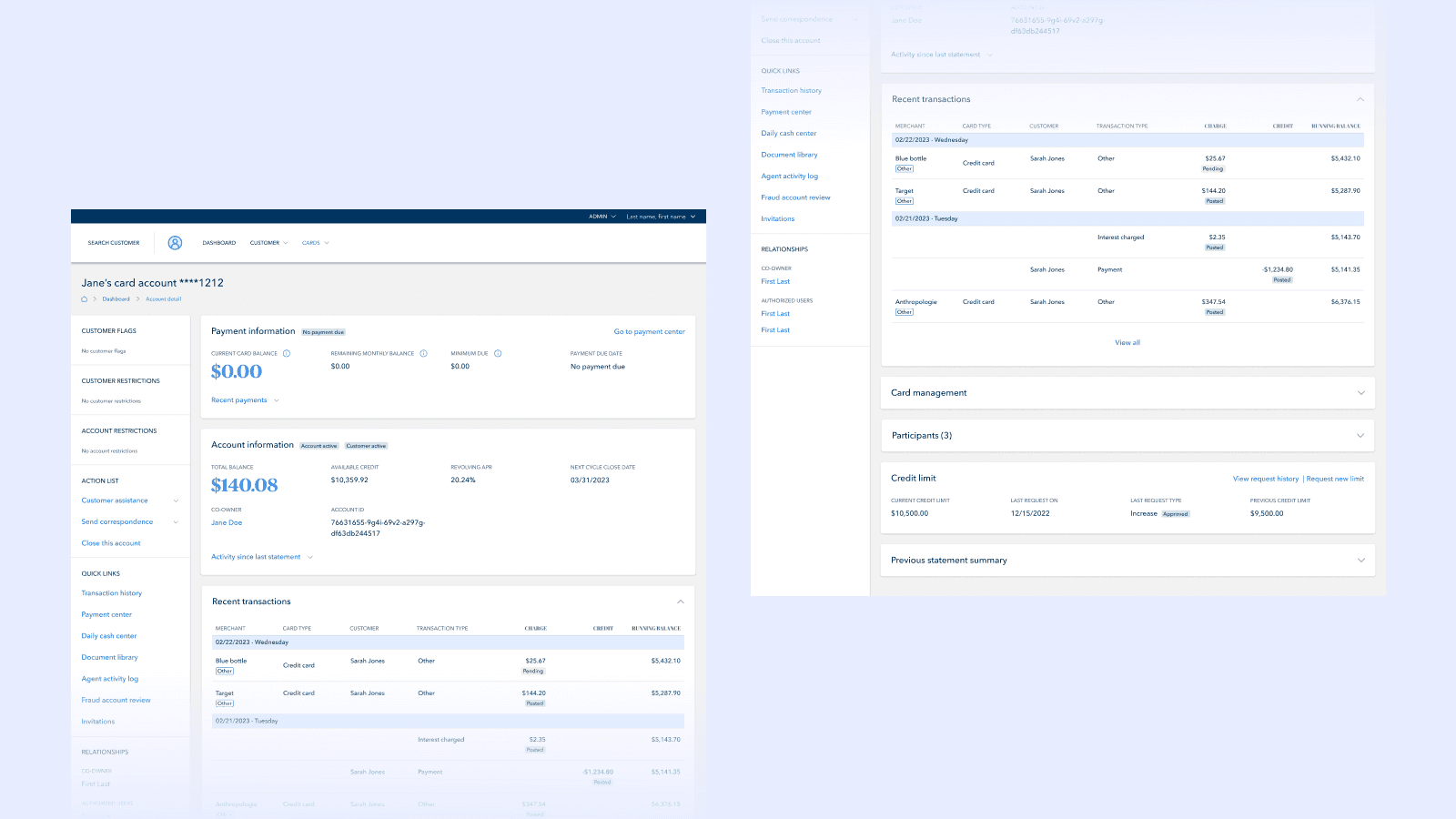
Front-Office Dashboard: The customer-facing dashboard was designed as a genuine one-stop shop: account status, payment information, flags, restrictions, and recent transactions all surfaced upfront. The left panel became the primary action hub — a consistent, reliable anchor for agents who needed to move fast without hunting.
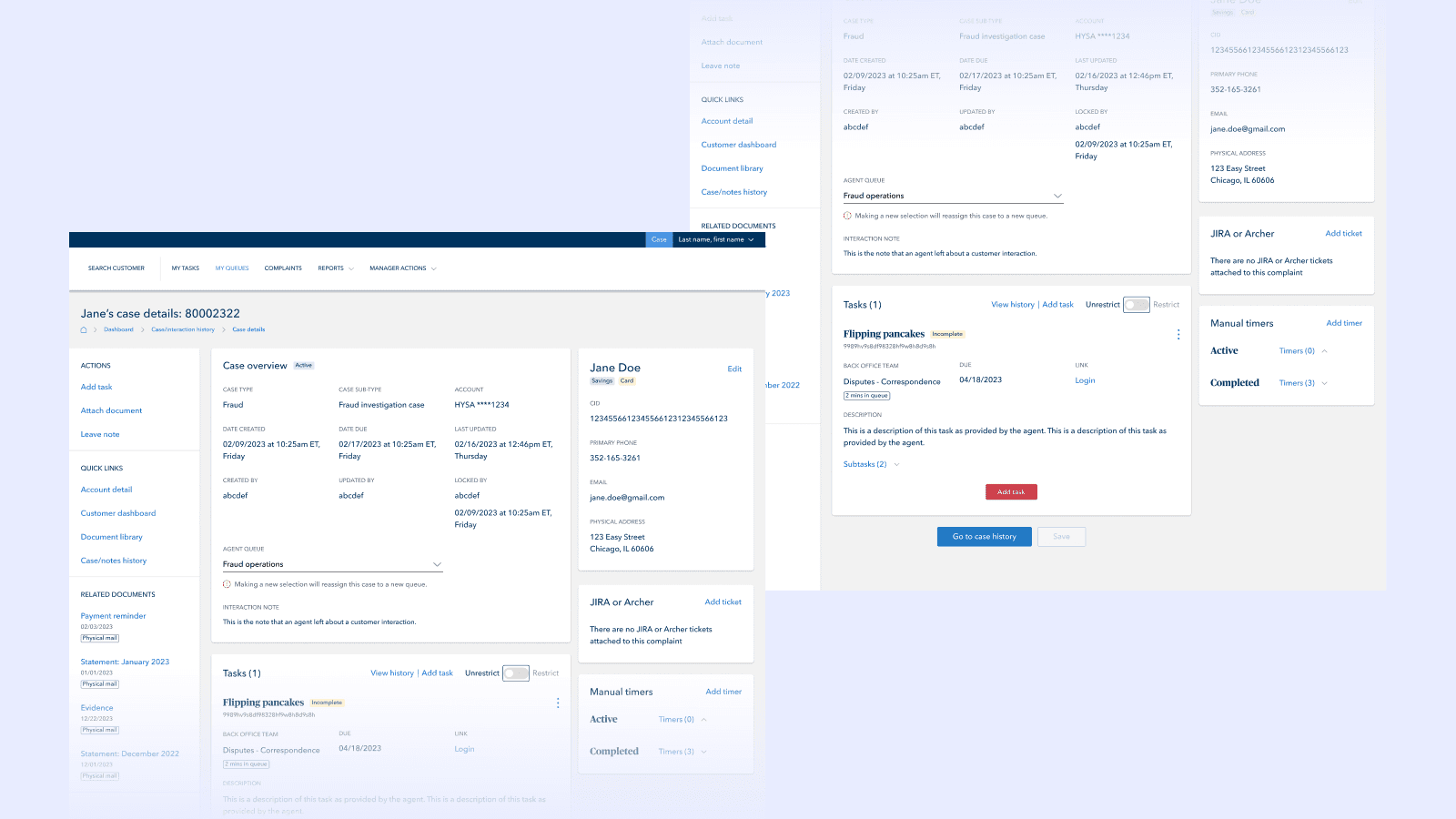
Case Agent View:
Non-customer-facing agents are focused on tasks and outcomes. Cohesive to the customer-facing agent experience, this view surfaces pertinent details upfront, but focuses on a linear path to completion as the agent moves down the screen.
Tasks are surfaced with clear CTAs and equipped with submission confirmation.
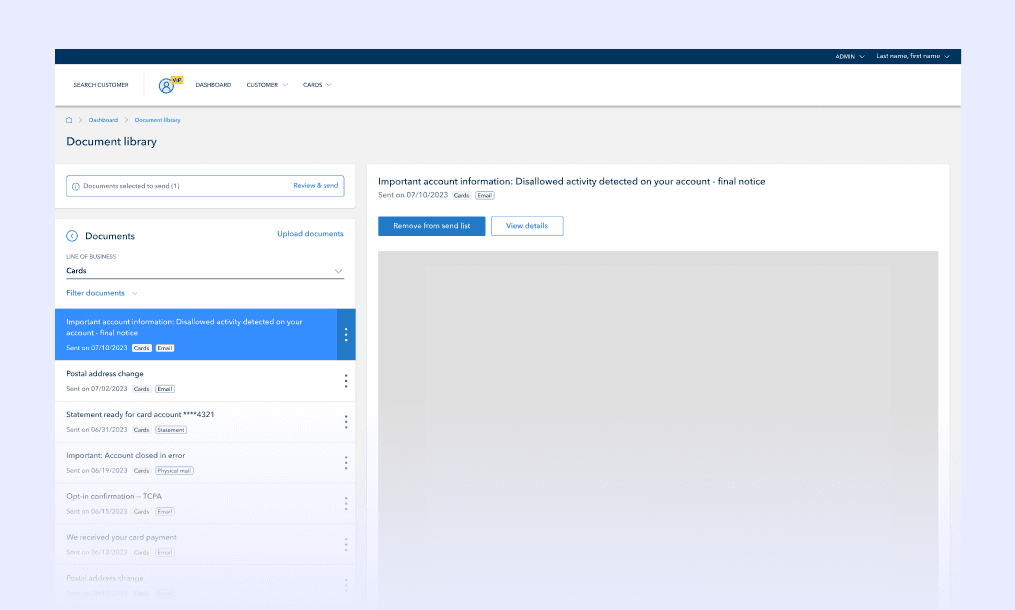
Document Library: Agents needed a clear and reliable way to access records of past messages for customers. The Document Library enables agents to upload, sort, filter, and aggregate documents simply and quickly. I also worked alongside the technology team to understand the data pull constraints to ensure the experience wasn't bogged down by load time.
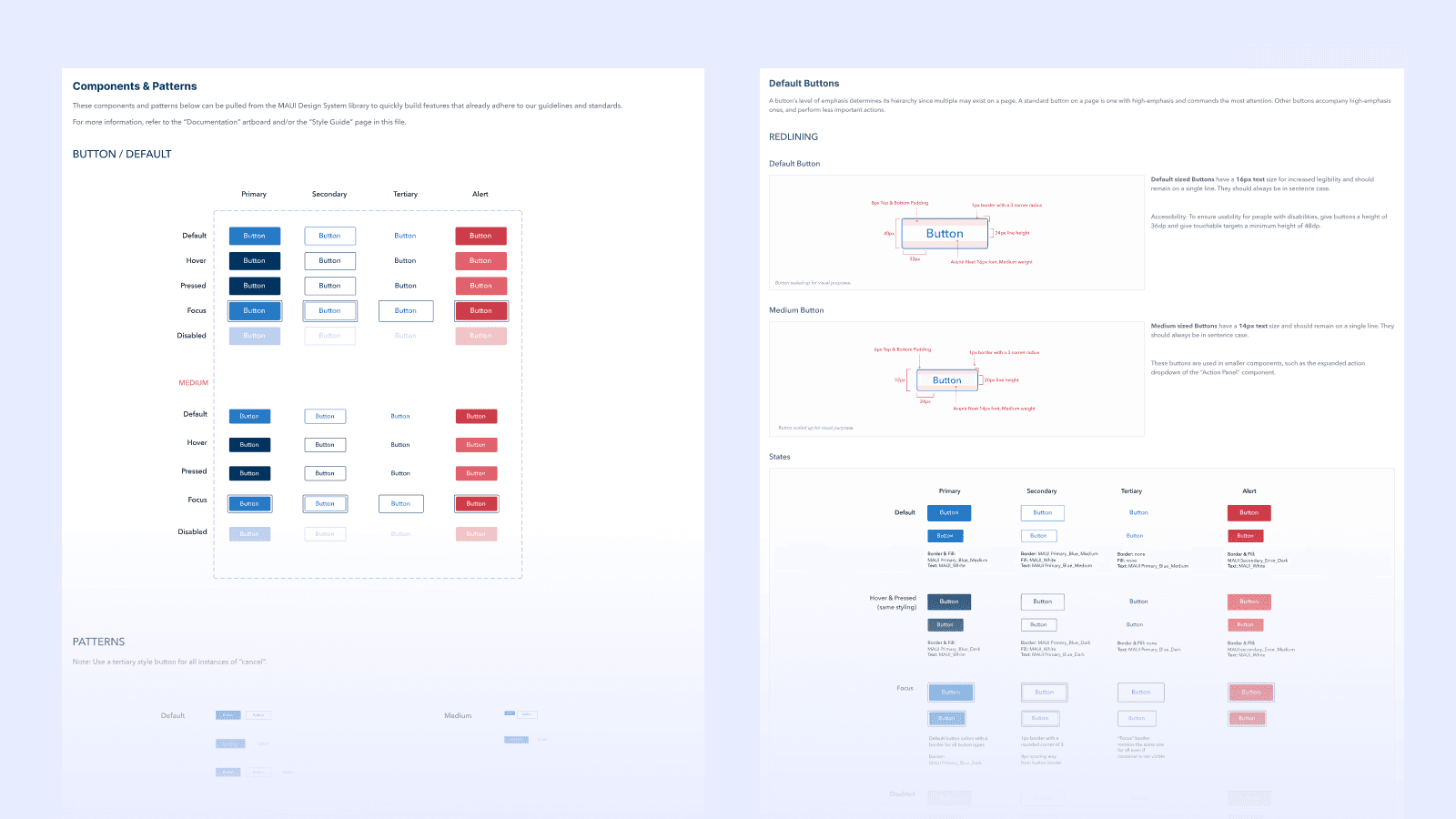
Design System: I helped transform a scrappy ad-hoc design library into a sophisticated, standardized, and versatile design system that was custom tailored to the platform.
In order to support multiple fast-paced designers, all supporting documentation was crucially detailed and implementation guidelines tightly governed.
Outcome
The design consolidated what had been a multi-tool, multi-tab experience into a single, navigable hub that reduced the cognitive overhead of context-switching and giving both agent types a purpose-built experience that matched how they actually work.
Reflection
This project sharpened my ability to hold complexity without collapsing it into oversimplification. With two distinct user types, one shared system, and a design language that had to feel consistent presented constraints that ultimately let to interesting design decisions and explorations.
If I were doing it again, I'd push earlier for structured usability testing with real agents. We relied heavily on stakeholder feedback, which was valuable, but getting artifact-level validation from the people doing the job every day would have surfaced edge cases sooner.