Rethinking a Workflow with AI
Process Mapping · UX Strategy
UX Designer supporting Research Lead
Tools: A whiteboard & an Expo marker, mostly
About This Project
Prospective partners beware: this one is not your typical case study bursting with flashy deliverables. I want to tell a story about a pivot that happened on a project recently. It's about a time my research partner and I encountered a major inflection point mid-stream, made a risky call to pivot, and used design thinking to reframe how an entire team understood the future of their work. Humor me, for a moment…
We were brought in to lead workflow modernization for a financial stress management process. It’s a critical, highly regulated function that had long lived in Excel spreadsheets and offline tools. The goal was to bring it online: build it into the business platform, keep it auditable, and make it sustainable. Standard enough.
Then agentic AI entered the conversation.
The Challenge
Our users were a small team of specialists (less than 10 people) doing complex calculations and data validation. They spent their days manually identifying anomalies in system-generated data, investigating the causes, analyzing scenarios, and making adjustments. Institutional knowledge was everywhere. Documentation, on the other hand, was sparse.
Our job was to understand the current-state workflow deeply enough to design something that actually served the people doing the work.
Discovery with our users was its own challenge. Trust was low, and we sensed real anxiety about automation. A small, specialized team in a high-efficiency push has good reason to wonder what "modernization" means for their jobs.
The Pivot
We had identified the happy path, a clean initial use case to anchor the first design around, but with AI discourse being among if not the topic of the moment, we couldn't help but think about how that might impact this work.
Everything we were designing was a digital version of what users already did manually. Search for anomalies. Investigate. Decide. Adjust. Sign off. The same cognitive load in a cleaner interface was an improvement, but hardly a transformation.
Once we understood and explored what was possible with Agentic AI, it became clear that continuing down the path we were on meant building something we'd have to substantially rework the moment agentic capabilities arrived. It would be inevitable and costly. We didn't know what our stakeholders' appetites would be for a shift like this, or if we had the infrastructure to start building it, but we pitched the idea anyway. Even if we couldn't build it tomorrow, we felt obligated to present an opportunity we knew would support our users and the business much more than our current tooling did.
The Solution
First, a new service blueprint. My partner and I went back through the full workflow and systematically identified every step a system could own:
Running calculations
Detecting anomalies
Aggregating decision history
Suggesting fixes proactively
The opportunities were significant, but we were still mapping against the same old persona-based swim lanes.
So we restructured the entire service blueprint around three new swim lanes:
100% Human. Decisions, oversight, and sign-off that must stay with the specialist.
100% Agent. Process steps the system can own end-to-end, without requiring human input.
Human-Agent Collaboration. The interaction layer where the agent surfaces its work, explains its reasoning, and the human decides what to do with it.
This framing mattered greatly in how we approached the resulting UI patterns, and it also lended us a story for talking about automation with our users. We didn’t say "the system can do this now," but: here's where you stay in control.
A prototype proof-of-concept made it feel real. I built a UI prototype showing what this workflow could look like. A process that currently takes days could be handled in two clicks.
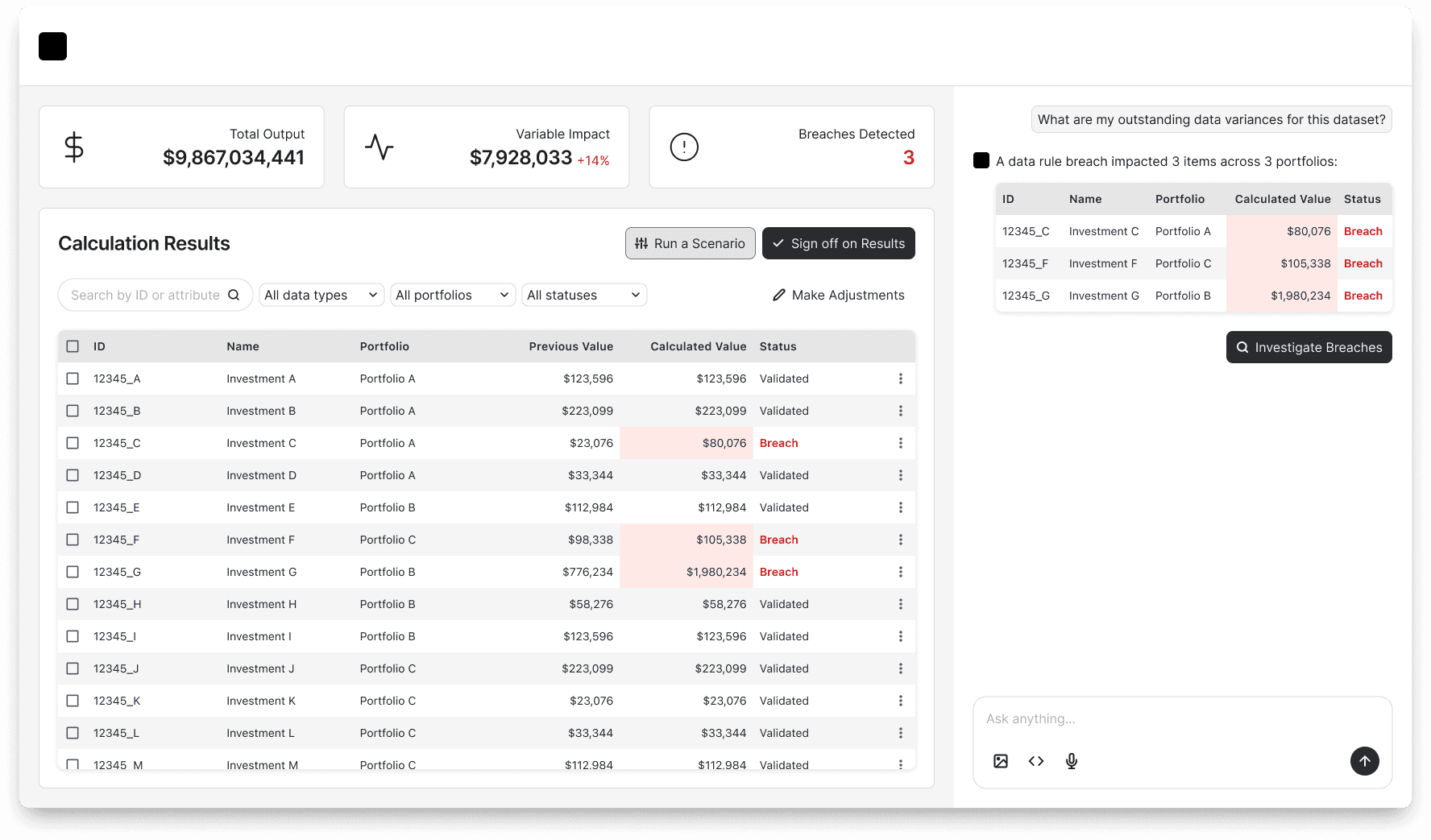
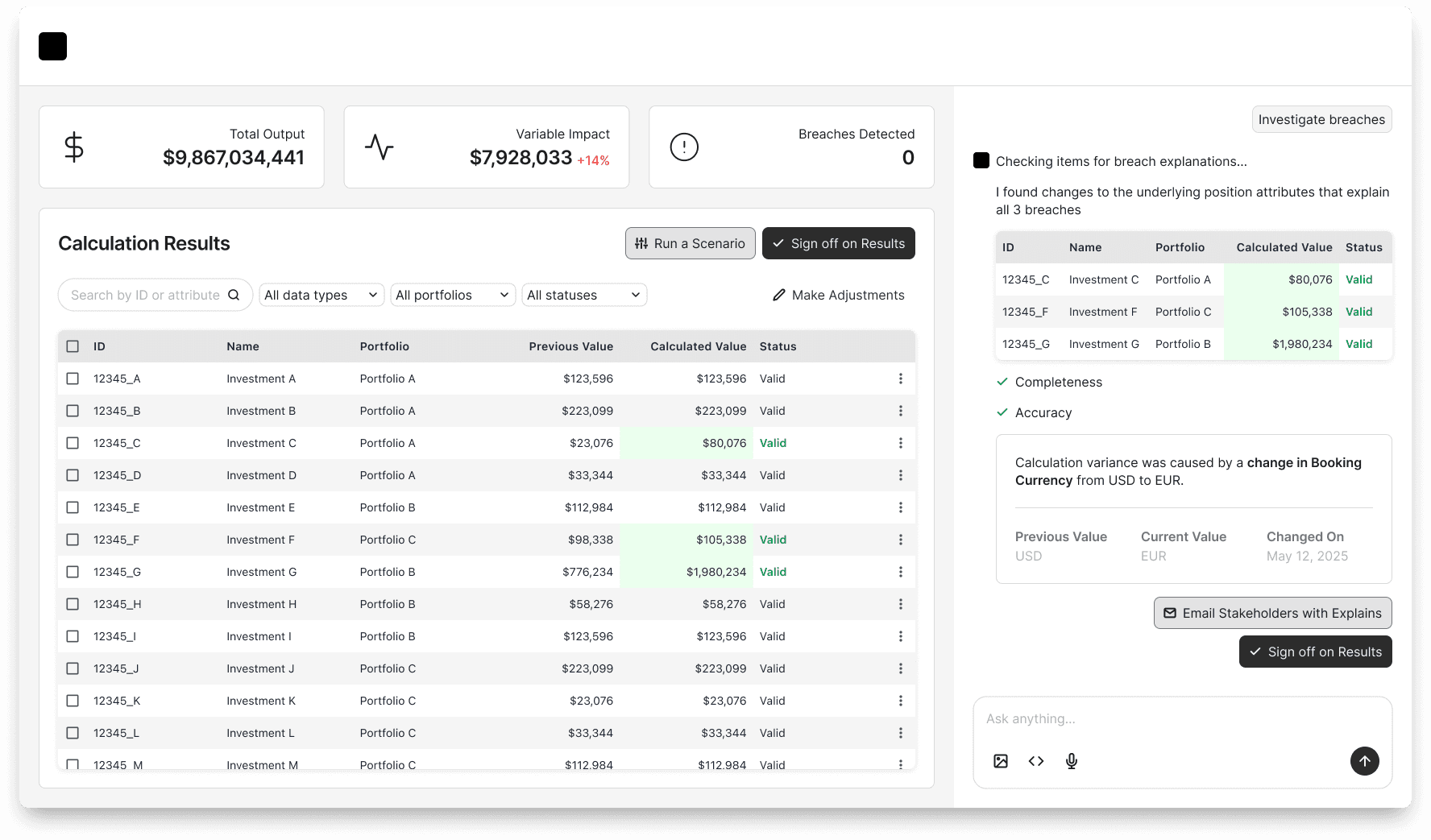
When I showed it to one of the analysts we'd been working with, his response was:
"As a user, I want this."
Unprompted and beautifully unambiguous. So satisfying, but also significant given their sensitivities around modernizing their tools. We anticipated a bit of push back from our users, but in the end they gave us more feedback about how to push it even further.
Results & Reflection
Agentic experiences are still working their way through leadership approval. (Shoutout Governance & Compliance!) How agentic processes get implemented will take time, and the questions keep coming: which agents do we need? What are their responsibilities? How do we define and measure success? What guardrails do we need?
The most important design decision on this project wasn't a UI choice. It was deciding to stop, reassess, and reframe, even though it meant disrupting momentum.